

Last Updated: October 30, 2026
Quick Summary
Synthetic fragrance is an umbrella term for lab-created scent compounds added to make a product smell appealing, and manufacturers are not required to list those compounds individually, so "fragrance" or "parfum" can stand in for dozens of undisclosed ingredients. For reactive skin, reading the label closely is a sensible habit.
- A product labeled unscented often is not fragrance-free and may contain a masking fragrance.
- Fragrance-free means no scent has been added at all, while unscented may contain fragrance.
- A single fragrance can conceal roughly 14 undisclosed chemicals, per Consumer Reports reporting.
- Citrus oils, lavender, peppermint, and ylang-ylang carry fragrance allergens that can provoke reactions.
- Patch test any new product before applying it to your face or a large area.
Table of Contents
- What Synthetic Fragrance Really Means on a Skincare Label
- How to Read Skincare Ingredient Labels Without Getting Fooled
- The Dangers of Phthalates in Skincare
- Fragrance-Free vs Unscented Skincare: They Are Not the Same
- Benefits of Essential Oils vs Synthetic Fragrance
- Building a Fragrance-Free Ritual for Reactive, Mature Skin
- Shop Fragrance-Free Formulas at Sattva Essence Organics
- Frequently Asked Questions
What Synthetic Fragrance Really Means on a Skincare Label
Many people now ask why they should avoid synthetic fragrance in skincare, because the word "fragrance" on a label tells you almost nothing about what is actually inside the jar.
Synthetic fragrance is an umbrella term for any lab-created scent compound, or blend of compounds, added to a product to make it smell appealing. Manufacturers are not required to list those compounds individually, so "fragrance" or "parfum" can legally stand in for dozens of undisclosed ingredients.
Below, we break down the labeling tricks, the phthalate problem, and how to build a fragrance-free ritual that works for reactive, mature skin.
How to Read Skincare Ingredient Labels Without Getting Fooled
The fastest way to screen a product is to flip it over and read the back, not the front.
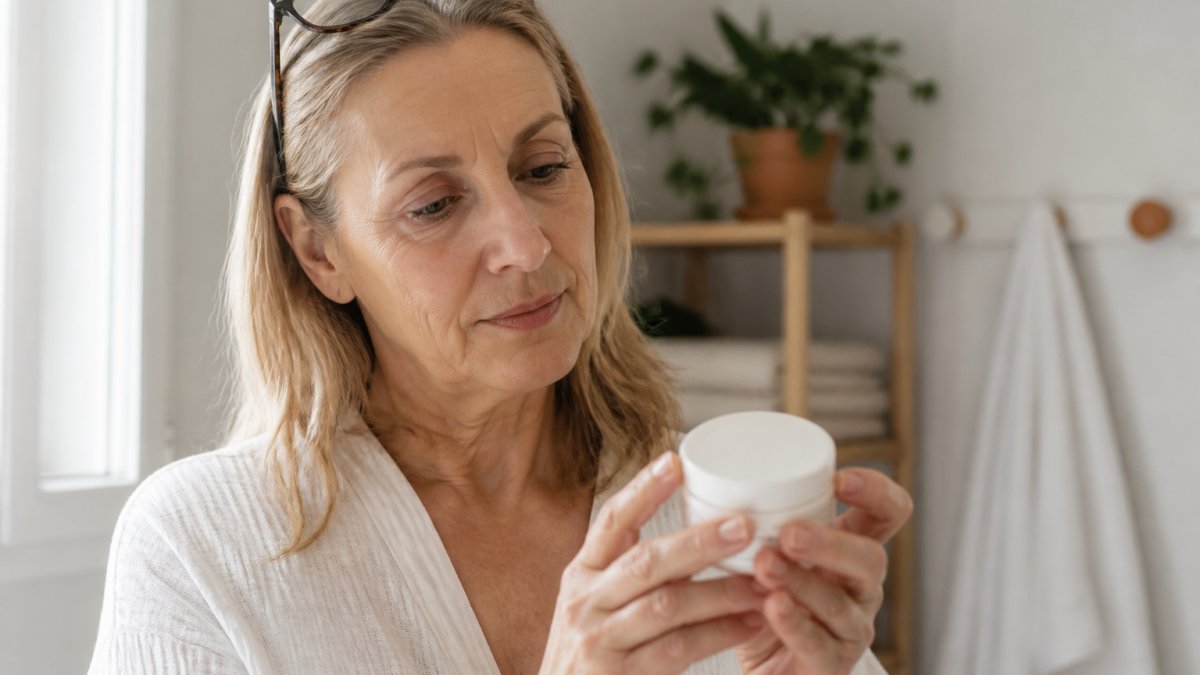
Start with the first five ingredients, which make up the bulk of the formula. Then scan the full list for scent terms, because they can hide near the bottom in small amounts and still trigger a reaction. If you want a deeper walkthrough of marketing claims versus real disclosure, our guide on how to identify greenwashing in organic skincare covers the specific phrases brands use to sound cleaner than they are.
The Words That Signal Hidden Fragrance
Watch for these terms, any of which can indicate an added scent:
- Fragrance, parfum, aroma, the catch-all terms that legally conceal the blend
- Essential oil blends, natural, but still a source of sensitizing compounds
- Linalool, limonene, citronellol, geraniol, eugenol, individual fragrance allergens that must be declared in some markets
- Masking fragrance, added to cover the smell of raw materials in an "unscented" product
A common mistake is assuming a product labeled "unscented" is fragrance-free. It often is not, and that distinction matters more than most shoppers realize.
The Dangers of Phthalates in Skincare
Phthalates are an ingredient worth watching for, though they rarely appear by name.
Research published in the National Library of Medicine's PubMed Central review on perfumes and cosmetic products associates synthetic chemicals in perfumes and cosmetics with adverse health outcomes, including allergies and respiratory issues. A separate 2023 review in PubMed Central on synthetic fragrances and the endocrine system discusses prior research suggesting synthetic perfumes may perturb the endocrine-immune-neural axis, though the authors stop short of calling it a proven effect.
For reactive skin, reading the label closely is a sensible habit.
Fragrance-Free vs Unscented Skincare: They Are Not the Same
Fragrance-free means no scent has been added at all, while unscented means the product may contain a fragrance used to neutralize the smell of other ingredients. The two labels sound interchangeable and are not.
A cream marked "unscented" can still contain a masking fragrance, and a product marked "natural fragrance" can still contain essential oils that irritate sensitive skin.
If the ingredient list contains the word fragrance, parfum, or aroma, treat it as fragranced regardless of what the front label promises. When you want certainty, look for products that state "no fragrance" and back it up with a full ingredient list, such as our calm healing body butter for sensitive or irritated skin.

The two labels sound interchangeable, but they mean different things on a skincare label.
Fragrance-Free Baby Body Cream – Little Love (Organic Line) →
| Label | What it means | What to watch for |
|---|---|---|
| Fragrance-free | No scent has been added at all | Look for a full ingredient list backing the claim |
| Unscented | May contain a fragrance to neutralize other ingredients' smell | Masking fragrance can still be present |
| Natural fragrance | Scent from botanicals rather than lab-made compounds | Can still contain irritating essential oils |
| Fragrance, parfum, or aroma on the list | Treat the product as fragranced | Front-label promises do not override the ingredient list |
Benefits of Essential Oils vs Synthetic Fragrance
Natural scent is not automatically gentler, since essential oils can irritate skin too.
So why do we still favor botanicals? Because the trade-off is transparency. Essential oils are declared on the label by name, so you can identify and avoid the ones your skin dislikes. Synthetic fragrance blends are protected as trade secrets, and reporting from Consumer Reports on concerning ingredients in cosmetics notes that a single fragrance can conceal roughly 14 undisclosed chemicals.
When Natural Still Means Sensitizing
Some of the most common essential oils are also common allergens. Citrus oils, lavender, peppermint, and ylang-ylang all carry fragrance allergens that can provoke reactions in sensitive skin.
If your skin is reactive, the safest path is a genuinely fragrance-free formula rather than a naturally scented one. Botanicals can still do real work in a formula, calming and nourishing without a drop of added scent.
Building a Fragrance-Free Ritual for Reactive, Mature Skin
A stripped-back routine often suits mature skin well. The goal is fewer products, each doing more, with nothing in the formula that your skin has to defend against.
Start with a gentle cleanse, then apply a rich, fragrance-free moisturizer while skin is still damp. For mature skin, our body cream anti aging for mature skin fits a fragrance-free regimen. If your skin is chronically dry or easily irritated, the calm healing body butter for sensitive or irritated skin is formulated for reactive, chronically dry skin.
Watch out: patch test any new product before applying it to your face or a large area, especially if you have a diagnosed condition like eczema. And if a reaction is severe or persistent, see a dermatologist rather than guessing at the cause.
Shop Fragrance-Free Formulas at Sattva Essence Organics
Reading labels gets you most of the way there. Buying from a maker who formulates without synthetic scent gets you the rest, and that is the whole reason we built our line the way we did.
Our body butters are handcrafted in small batches, vegan and cruelty-free, and made with natural botanicals. Our formulas are frequency-infused, as part of the ritual.
If you are still deciding where to start, you can browse our best sellers to see what other customers reach for first.
Frequently Asked Questions
What are the side effects of synthetic fragrance in skincare?
A common reaction to fragrance is skin irritation, and because fragrance formulas are protected as trade secrets, a single listing can hide many undisclosed ingredients, so you often cannot tell which one triggered a reaction.
How can I identify synthetic fragrance on an ingredient label?
Scan for the words fragrance, parfum, aroma, or perfume, which are catch-all terms that can cover thousands of chemicals. Watch for phthalates, which may be listed as DEP, DBP, or diethyl phthalate. If a label says unscented, check anyway: unscented products can still contain masking fragrance. Only fragrance-free on the label, paired with a short botanical ingredient list, tells you no scent was added.
Are there FDA regulations regarding fragrance labeling?
Reading labels carefully and choosing brands that disclose full ingredient lists is your main protection.
Is fragrance on a label always synthetic?
No. The term fragrance can cover synthetic compounds, essential oils, or a mix of both, and the label will not tell you which. That ambiguity matters because natural does not automatically mean gentler, since essential oils can irritate some people's skin. If your skin is reactive, treat any scented formula, natural or not, as something to patch test first.
The hardest part of going fragrance-free is not finding products, it is trusting that a label means what it says. We built Sattva Essence Organics and Naturals around that trust: small-batch body butters, natural botanicals, vegan and cruelty-free formulas, and no synthetic fragrance hiding in the jar. Get started with Sattva Essence Organics and Naturals and give your skin a ritual it does not have to fight.


