

Table of Contents
- Step 1: Read Organic Skincare Labels Like a Skeptic
- Step 2: Verify Organic Skincare Certification and Evidence Standards
- Step 3: Spot Natural Skincare Claims and Clean Beauty Greenwashing Red Flags
- Frequently Asked Questions
Last Updated: October 17, 2026
Step 1: Read Organic Skincare Labels Like a Skeptic
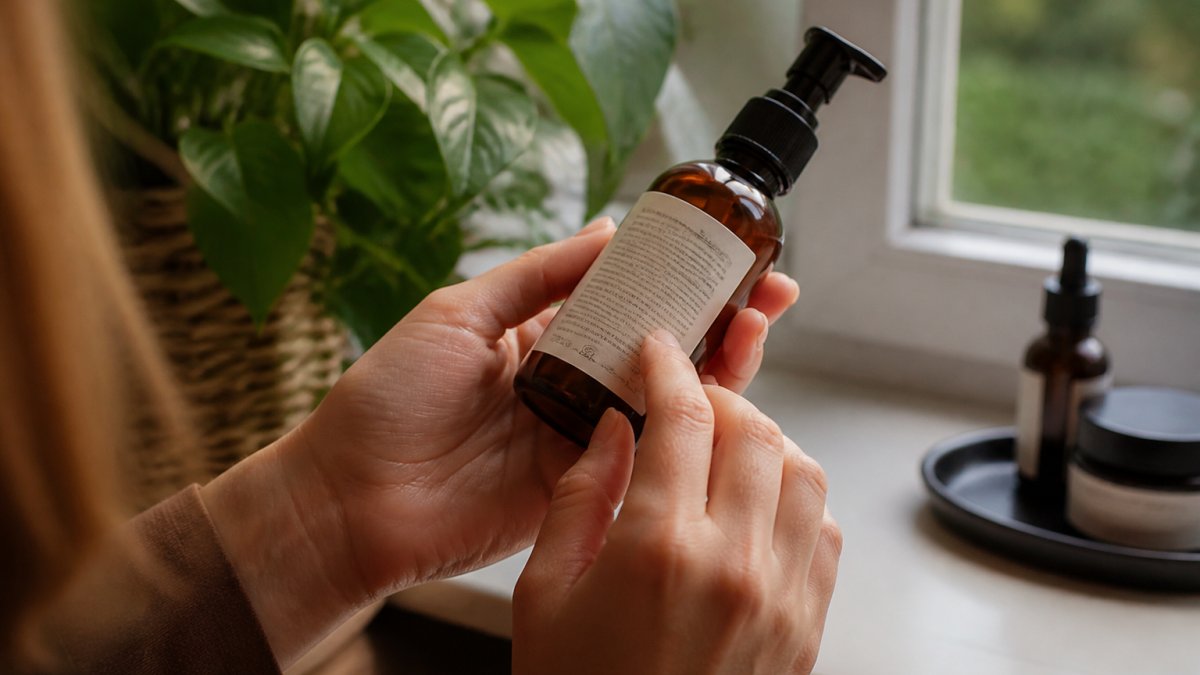
Spotting greenwashing in organic skincare starts with reading the back of the bottle, not the front, at Sattva Essence Organics and Naturals, we tell customers to flip the bottle first and ignore the imagery. "Natural" in large green letters means little, since the term is loosely defined and largely unregulated. Find the ingredient list ("Ingredients" or "INCI"), check whether it's complete or hides behind "fragrance," look for a certification seal rather than a leaf icon, and compare the first five ingredients, which make up most of the formula. The FDA's guidance on cosmetic labeling is a useful baseline for what companies must legally disclose, and what they aren't required to prove.
Step 2: Verify Organic Skincare Certification and Evidence Standards
Organic skincare certification is a third-party audit confirming how ingredients were grown and handled, not the same as "made with organic ingredients," two very different claims brands blur on purpose. Look for a named certifier on the package; a real seal identifies the issuing body and often a certificate number, and if you can't find who certified it, the claim is unverified. Ask who certified it, what percentage is organic, whether the whole product or one ingredient is certified, and whether you can request documentation. The USDA National Organic Program explains how organic certification works for agricultural ingredients.
Step 3: Spot Natural Skincare Claims and Clean Beauty Greenwashing Red Flags
Clean beauty greenwashing hides in vague language and pretty packaging. Red flags: "chemical-free" (everything is a chemical, including water), "non-toxic" (meaningless without a standard), angel dusting (a tiny amount of a trendy botanical listed last to justify a front-label claim), "fragrance" or "parfum" (a catch-all that can hide dozens of ingredients), and "dermatologist-tested" (often vague about who tested it and how). The FTC's Green Guides set expectations for how environmental claims should be substantiated. Natural and synthetic ingredients both have a place: "natural" doesn't automatically mean safer, and "synthetic" doesn't automatically mean harsh, judge the formula, not the buzzword. At Sattva Essence Organics and Naturals, we list full ingredients on every product, including our Calm Healing body butter for sensitive skin, the transparency we'd ask of any brand.

Frequently Asked Questions
How can I tell whether an organic skincare claim is trustworthy?
Look for third-party certification seals like USDA Organic on the label. A trustworthy organic skincare claim will name the certifying body and specify which ingredients are certified. If a product says 'organic' without a seal or certification details, treat it as a marketing claim, not a guarantee. Check the ingredient list for the concentration and position of organic ingredients, and verify any environmental claims with evidence rather than green imagery or vague language.
Calm Healing for Sensitive or Irritated Skin (Organic Line) →
What should I look for on an organic skincare label to spot greenwashing?
Start with the INCI ingredient list: ingredients are listed in descending order of concentration, so botanicals near the bottom may be present only in tiny amounts (angel dusting). Watch for vague terms like 'clean,' 'natural,' or 'eco-friendly' that have no legal definition. Look for specific certifications, avoid products that list 'fragrance' or 'parfum' without disclosure, and be skeptical of green colors or recycling symbols that aren't backed by verified claims.
Is clean beauty greenwashing?
'Clean beauty' is an unregulated marketing term, so it can be used to imply safety or sustainability without proof. Some brands use it to signal ingredient transparency and ethical sourcing, but others rely on it as a vague claim. To avoid clean beauty greenwashing, ask for specifics: which ingredients are excluded and why, what third-party certifications exist, and whether environmental claims are substantiated. If a brand can't provide evidence, the label is likely more about marketing than meaning.
The skincare aisle rewards skepticism, and that is a good thing. If you are tired of decoding vague labels and want ingredients you can actually read, Sattva Essence Organics and Naturals makes small-batch, vegan, cruelty-free body butters with full transparency. Explore our frequency-infused, handcrafted line and shop Sattva Essence today.


