

Table of Contents
- Candle Meditation for Beginners: Getting Started
- Step 1: Choose the Right Candle and Set Up Your Space
- Step 2: Prepare Your Body and Mind
- Step 3: Light the Candle and Begin Candle-Gazing Meditation
- How Long Should Candle Meditation Duration Be?
- Candle Meditation Safety: Fire, Eyes, and Accessibility
- Troubleshooting Common Distractions and Alternatives to an Open Flame
- Frequently Asked Questions
Last Updated: October 17, 2026
Candle Meditation for Beginners: Getting Started
Learning how to use candles for meditation is a simple focus practice where you rest your eyes on a single flame and gently return your attention to it each time your mind drifts. If you have ever wondered how to use candles for meditation, the answer is easier than most guides suggest: one candle, one quiet spot, and a few unhurried minutes are enough to begin. At Sattva Essence Organics and Naturals, we treat this ritual as a grounding practice first and a technique second. The steps below walk you through setup, posture, gazing, and safe stopping points.
What You'll Need
You need very little to start, which is part of the appeal.
- One candle in a stable holder
- A heat-safe surface, such as a ceramic plate or stone coaster
- A quiet space where you will not be interrupted
- A chair or cushion that supports an upright spine
- A timer, optional but helpful for beginners
- A glass of water nearby
That is the whole list. No app, no special cushion, no membership. The practice lives in your attention, not your equipment.
Step 1: Choose the Right Candle and Set Up Your Space
Choosing a candle comes down to three things: how it burns, how it smells, and where you place it. A clean-burning wax and a steady wick matter more than color or brand. Set the candle at eye level or slightly below, roughly an arm's length away, so your neck stays relaxed while you gaze.
Candle Selection and Scent Considerations
Scent is where many beginners make their first mistake. A strong fragrance can pull attention toward the nose instead of the flame, which defeats the purpose.
- Unscented candles suit people who want the purest visual focus.
- Light fragrance works well when you want scent to support calm without dominating.
- Essential oils can add a gentle note, but check for sensitivity first.
- Strong fragrance is usually best avoided during practice, especially in small rooms.
If you have scent sensitivity, asthma, or allergies, choose unscented and ventilate the room. A tea light in a sturdy holder is a fine starting point because the flame stays small and contained.
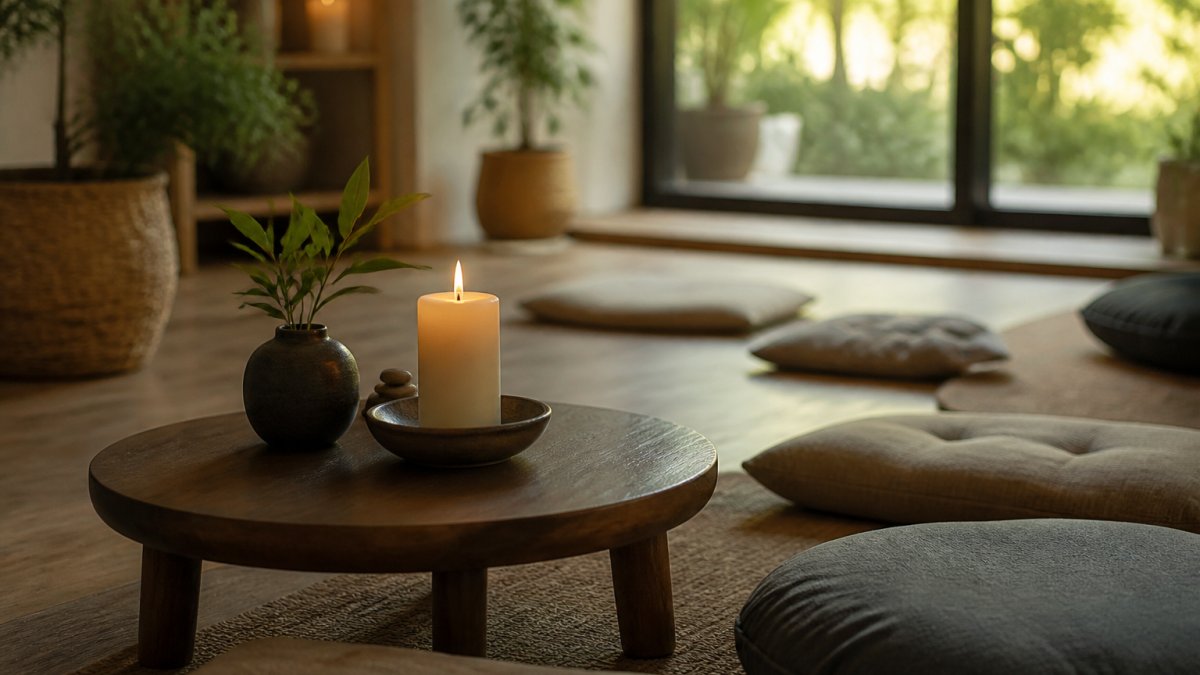
For a longer session, a larger hand-poured candle gives you a steadier flame. Our Sacred Stillness Coco Soy Candle is a creamy sandalwood option made for exactly this kind of quiet sitting.

Step 2: Prepare Your Body and Mind
Preparation takes about two minutes and changes the whole session. Sit with your spine upright but not rigid, shoulders soft, hands resting in your lap. Take three slow breaths before you light anything. This tells your body that the next few minutes are different from the rest of your day.
A short routine helps:
- Settle into your seat and feel its support.
- Drop your shoulders and unclench your jaw.
- Breathe in through your nose for a count of four.
- Breathe out slowly for a count of six.
- Let your gaze soften before you strike the match.
The National Center for Complementary and Integrative Health overview of meditation notes that meditation practices are generally safe for healthy people, though anyone with a health condition should check with a clinician first.
Step 3: Light the Candle and Begin Candle-Gazing Meditation
Light the candle, then let your eyes rest on the flame without staring hard. Candle-gazing meditation, sometimes called trataka, asks for a soft, steady gaze rather than an intense one. Blink normally. When your attention wanders, and it will, bring it back to the flame without scolding yourself.
Gazing at the Flame
Rest your gaze on the brightest part of the flame, just above the wick. Keep your face relaxed. If your eyes water or sting, lower your gaze to the candle base for a few breaths, then look away entirely. Gazing is meant to steady the mind, not strain the eyes.
Breathing Slowly and Steady
Let your breath find its own slow rhythm. There is no need to count or force anything. Inhale, exhale, and let the flickering light be the anchor your attention returns to. When a thought pulls you away, notice it and come back. That return is the practice.
How Long Should Candle Meditation Duration Be?
A good candle meditation duration for beginners is five to ten minutes. Start at five and add a minute or two each week as your focus settles. Longer is not automatically better; a calm five minutes beats a restless twenty. What most guides leave out is the shape of the session itself. Below is a complete, timed beginner plan you can follow tonight, plus a duration table you can grow into.
Sacred Stillness — Coco Soy Candle →
A Complete 10-Minute Beginner Session Plan
Set a timer so you are not checking the clock. This plan assumes a candle at eye level or slightly below, roughly an arm's length away, on a heat-safe surface.
| Time | What You Do |
|---|---|
| 0:00-1:00 | Settle into your seat. Feel the support under you. Drop your shoulders, unclench your jaw, and rest your hands in your lap. |
| 1:00-2:00 | Take three slow breaths: in through the nose for a count of four, out for a count of six. Let your gaze soften before you strike the match. |
| 2:00-2:30 | Light the candle. Watch the flame settle for a few breaths before you begin gazing. |
| 2:30-7:30 | Rest your eyes on the brightest part of the flame, just above the wick. Blink normally. When attention wanders, return it to the flame without scolding yourself. |
| 7:30-9:00 | Lower your gaze to the candle base or close your eyes. Let the afterimage fade while you breathe slowly. |
| 9:00-10:00 | Blow out the candle or use a snuffer. Sit for a few breaths before you stand up. |
Posture, Gaze Distance, and Breath
- Posture: Sit with your spine upright but not rigid. A chair with back support or a firm cushion both work. The goal is a spine that can stay tall for ten minutes without strain.
- Gaze distance: Place the candle about an arm's length away, at eye level or slightly below, so your neck stays relaxed. Closer than that tends to cause eye strain; farther away makes the flame hard to rest on.
- Breath: Let your breath find its own slow rhythm. There is no need to count or force anything after the opening three breaths. Inhale, exhale, and let the flickering light be the anchor your attention returns to.
- Closing step: Always close with a few breaths away from the flame before you stand. This prevents the groggy, unfinished feeling that comes from jumping straight up from a focused state.
Duration by Experience Level
| Experience Level | Session Length | Frequency |
|---|---|---|
| First week | 3-5 minutes | Daily if possible |
| Weeks 2-4 | 5-10 minutes | 4-5 times a week |
| Established practice | 10-20 minutes | As it suits you |
If you only have three minutes, do the plan above and cut the gazing block to one minute. The structure matters more than the length.
Candle Meditation Safety: Fire, Eyes, and Accessibility
Safety is the part most candle guides skip, and it matters most. Never leave a burning candle unattended. Keep it away from curtains, paper, and pets. Use a holder that will not tip, and place it on a surface that cannot catch fire. The specifics below turn those general rules into habits you can actually follow.
Fire Safety in Practice
- Stable surface: Set the candle on a flat, heat-safe surface such as a ceramic plate or stone coaster. Avoid cloth runners, wood veneer, and anything that can tip if bumped.
- Wick length: Trim the wick to about a quarter inch before each session. A long wick produces a tall, jumping flame that is harder to gaze at and more likely to smoke.
- Drafts: Keep the candle out of drafts from windows, fans, and vents. A steady flame is easier to rest your eyes on, and a draft can push the flame toward nearby objects.
- Extinguishing: Blow the candle out or use a snuffer rather than letting it burn down. Keep a lid or snuffer within reach so you are not searching for one while the flame is lit.
- Ventilation: If you use a scented candle, crack a window or run a fan on low. This is especially important in small rooms.
- Supervision: Do not practice while drowsy, after alcohol, or in a room where you might fall asleep. A drifting mind near an open flame is the most common cause of avoidable accidents.
A CDC home fire safety guidance reminder applies here: working smoke alarms and careful placement are basic precautions whenever a flame is lit indoors.
Eye Comfort and When to Stop
Gazing is meant to steady the mind, not strain the eyes. Blink normally throughout the session. If your eyes water or sting, lower your gaze to the candle base for a few breaths, then look away entirely at something distant. Stop the session if you notice any of the following:
- Burning, stinging, or heavy watering that does not ease when you look away
- A headache that builds during or after gazing
- Dizziness, nausea, or a sense of the room tilting
- Afterimages that persist longer than a minute or two after you close your eyes
People with eye conditions, migraines, or a history of seizures should speak with a doctor before trying flame gazing, since flickering light can be a trigger for some. A National Center for Complementary and Integrative Health overview of meditation notes that meditation practices are generally safe for healthy people, though anyone with a health condition should check with a clinician first.
Accessibility and Alternatives to an Open Flame
Candle meditation can be adapted for almost any body or home. If you cannot safely manage an open flame, or if you have low vision, you can use a battery-operated candle or a small lamp. The gaze and the breath are what matter, not the fire itself.
- Battery-operated candles: Choose one with a warm, steady glow rather than a strobe or color-changing mode. Place it at the same eye level and distance as a real candle.
- Small lamp or salt lamp: A low-wattage lamp on a dimmer gives a steady focal point without any flame risk.
- Bowl of water reflecting light: A shallow bowl placed near a window or lamp creates a soft, moving reflection that some practitioners find easier on the eyes than a direct flame.
- Guided meditation with eyes closed: If visual focus is uncomfortable, a guided audio session with the eyes closed preserves the attention-training benefit without any gaze at all.
- Mobility considerations: If sitting on the floor is difficult, a chair works just as well. If holding a steady head position is hard, prop the candle so it meets your natural line of sight rather than forcing your neck to adjust.
Troubleshooting Common Distractions and Alternatives to an Open Flame
Distraction is normal, not a sign of failure. The skill is in the return.
- Racing thoughts: Name the thought, then bring your eyes back to the flame.
- Sleepiness: Sit up straighter and open your eyes a little wider.
- Restlessness: Shorten the session and try again tomorrow.
- Scent sensitivity: Switch to an unscented candle and open a window.
If an open flame is not workable for you, alternatives include a battery candle, a salt lamp, a small bowl of water reflecting light, or a guided meditation with your eyes closed. A CDC home fire safety guidance reminder applies here: working smoke alarms and careful placement are basic precautions whenever a flame is lit indoors.
For a scent that supports calm without overwhelming the room, our sandalwood candle is infused at 528Hz and hand-poured in small batches, made to sit quietly beside you rather than compete with your attention.
Frequently Asked Questions
How long should you meditate with a candle?
For beginners, start with 5 to 10 minutes. As you get comfortable, you can extend to 15 or 20 minutes. The key is consistency, not length. If your eyes feel strained or your mind is restless, it's okay to stop early. Over time, you'll find a natural duration that feels grounding without being forced.
Is candle-gazing meditation safe for your eyes?
Yes, when done correctly. Keep a soft gaze, blink as needed, and avoid staring intensely. If your eyes water or feel tired, close them and visualize the flame. Never force yourself to keep your eyes open. Taking breaks every few minutes helps prevent strain and keeps the practice comfortable.
Do candles help with anxiety?
Many people find that candle meditation promotes relaxation and stress relief. The gentle focus on a flame can quiet racing thoughts and encourage slower breathing. While it's not a replacement for professional care, it can be a supportive mindfulness tool. Pair it with deep breathing for a calming effect.
How far away should a candle be during meditation?
Place the candle about an arm's length away, roughly 18 to 24 inches, at eye level or slightly below. This distance allows a comfortable gaze without straining. Adjust based on your eyesight and comfort. The goal is to see the flame clearly without leaning forward or squinting.
Candle meditation asks for very little, but it rewards consistency. The hard part is not the technique; it is giving yourself five quiet minutes and a safe, steady flame to rest your eyes on. That is where Sattva Essence Organics and Naturals comes in. Our handcrafted, frequency-infused candles are made with natural botanicals, poured in small batches, and designed to ground your space before you even strike a match. Shop Sattva Essence and let one small flame anchor your next quiet moment.


