

Last Updated: October 29, 2026
Quick Summary
A sugar scrub smooths skin texture by physically lifting dead skin cells from the surface, working best on thick areas like elbows, knees, and heels. Soak in warm water for 3 to 5 minutes, apply in light circles, rinse, pat dry, and moisturize within 3 minutes, using the scrub once or twice a week.
- Pre-soak in a warm, not hot, shower for 3 to 5 minutes before scrubbing.
- Use about one tablespoon for a full leg and one teaspoon for an elbow or knee.
- Scrub rough spots like elbows, knees, and heels for 20 to 30 seconds.
- Pat skin dry rather than rubbing, then moisturize within 3 minutes.
- Exfoliate once or twice a week, and skip it on inflamed, cut, or irritated skin.
Table of Contents
- What a Sugar Scrub Does for Skin Texture
- How to Use a Sugar Scrub Step by Step
- Best Sugar for Body Scrub: Grain Size and Type
- How Often to Exfoliate Body Skin
- Using a Sugar Scrub on Sensitive Skin
- Texture Concerns by Body Area and When to Skip Exfoliation
- Booking Your Next Smooth-Skin Ritual with Sattva Essence
- Frequently Asked Questions
What a Sugar Scrub Does for Skin Texture
A sugar scrub is a physical exfoliant. The sugar granules gently lift dead skin cells from the surface, which can leave skin feeling smoother and looking more even. Most of the change you notice comes from removing that dull, buildup layer.
Here's the catch: the research on sugar scrubs specifically is thin. Health sources do describe exfoliation as a way to smooth the surface (Chemical peels (face peels)). Treat the results as a reasonable expectation, not a guarantee.
Physical scrubs also aren't gentle for everyone. Healthline's guide to body scrubs warns that sugar scrubs can be too harsh for facial skin, even though they are often marketed as softening. That's why the method below focuses on the body first.
The texture change you can expect is modest and temporary. Rough patches on elbows, knees, and heels often respond best. The skin on your face usually doesn't.
How to Use a Sugar Scrub Step by Step
A sugar scrub works best as a short, deliberate sequence rather than a scrub-until-it-feels-done routine. The full sequence below takes about 8-10 minutes in the shower, and the timing matters more than the pressure.
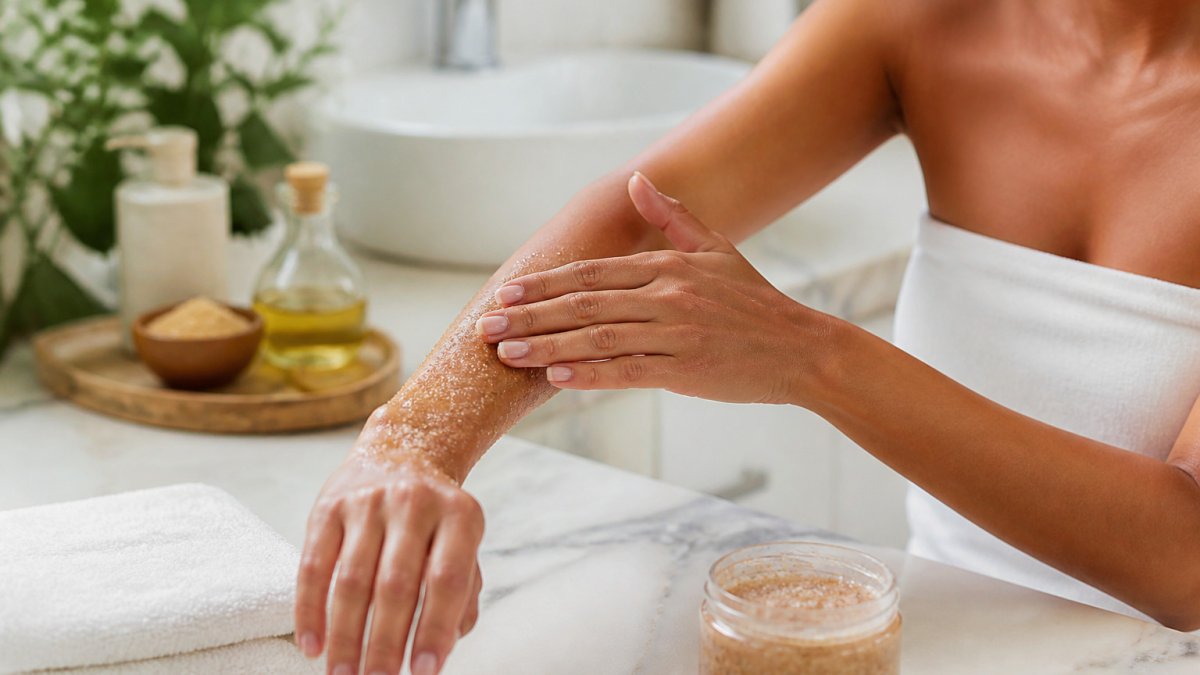
- Pre-soak for 3-5 minutes. Step into a warm, not hot, shower and let the skin soften before you touch the scrub. Hot water strips lipids and leaves skin more reactive to friction. Warm water plus a few minutes of steam is enough to loosen surface buildup without over-softening the skin.
- Work from dry-ish to damp, not soaking wet. Damp skin lets granules glide; dripping-wet skin dilutes the scrub and makes it slide off before it does anything. If you are using a jarred scrub, scoop with a clean spoon or spatula, never wet fingers, to keep the product from collecting water.
- Scoop a measured amount. About one tablespoon covers a full leg; a teaspoon is enough for an elbow or knee. More product does not equal more exfoliation, it just means more to rinse off.
- Apply in small circles with light pressure. Use your fingertips or palms, not a washcloth or loofah, which add abrasion on top of the sugar. The granules should feel like they are gliding, not dragging. If you feel scratching, add a splash of water rather than pressing harder.
- Time each area. Rough spots like elbows, knees, and heels can take 20-30 seconds of gentle circling. Thinner areas, chest, stomach, inner thighs, upper arms, should get 10-15 seconds at most, or be skipped entirely. The whole body should not take more than 3-4 minutes of actual scrubbing.
- Rinse with warm water until the water runs clear. Sugar dissolves, but the carrier oils in most scrubs do not. Any oil film left behind can trap sweat and lint, so rinse longer than feels necessary, usually 30-60 seconds per area.
- Pat, do not rub, dry. Rubbing with a towel adds friction to freshly exfoliated skin. Pat until damp, not bone dry.
- Moisturize within 3 minutes. Apply a body lotion, cream, or body butter while skin is still slightly damp. This is the step most people skip, and it is the one that determines whether the scrub leaves skin feeling smooth or tight. Look for humectants (glycerin, hyaluronic acid) plus an occlusive (shea butter, dimethicone, or petrolatum) rather than a thin lotion.
Aftercare that actually matters: Avoid shaving the same area on the same day, shaving removes a layer of skin on its own, and stacking the two is a common cause of irritation. If you use a retinoid or an acid serum on the body, apply it on a different day than the scrub.
The steps below summarise the routine, with the timing and frequency the article gives for each.
| Step | What to do | Time or frequency |
|---|---|---|
| Pre-soak | Warm (not hot) shower to soften skin | 3-5 minutes |
| Prepare scrub | Scoop with a clean spoon, work damp not wet | Measured amount |
| Measure | About 1 tbsp per full leg, 1 tsp per elbow or knee | Per area |
| Apply | Small circles, fingertips or palms, light pressure | Rough spots 20-30 sec; thin areas 10-15 sec |
| Rinse | Warm water until it runs clear | 30-60 sec per area |
| Dry | Pat until damp, do not rub | Immediately after rinse |
| Moisturize | Lotion or butter while still slightly damp | Within 3 minutes |
Best Sugar for Body Scrub: Grain Size and Type
The sugar you choose changes how the scrub feels. Finer granules feel gentler. Coarser granules remove more buildup but can scratch thin skin.
- Fine sugar: Good for sensitive skin and the most frequent use
- Raw or coarse sugar: Better for thick skin on feet and elbows
- Brown sugar: Softer grains with a light, moist feel
Our Invigorating Coffee Sugar Polish uses raw granule sugar and ground coffee, blended with shea butter, mango butter, and several plant oils. For more on buying handcrafted vegan sugar polish online, see our guide.
How Often to Exfoliate Body Skin
For most people, once or twice a week is plenty. Skin that is dry or sensitive should start with once a week.
Pay attention to how your skin responds. Redness that lasts past the scrub, tightness, or a stinging feeling means you should back off. Skip a week and try again with lighter pressure.
Using a Sugar Scrub on Sensitive Skin
Sensitive skin needs extra care. Patch test first: apply a small amount to the inner forearm and wait 24 hours. If there's no reaction, you can use it on other areas.
Avoid the face entirely unless you have been told a gentler product is appropriate. Keep sessions short, and stop if you see irritation. A sensitive-skin scrub with finer sugar and a rich butter base is the safer choice.
Rose Radiance Sugar Polish — Net Wt. 8 oz →
Texture Concerns by Body Area and When to Skip Exfoliation
Body skin is not one tissue. The same scrub that smooths a heel can irritate a chest, and the areas most prone to bumps, upper arms, back, and thighs, often need a different approach than the areas most prone to roughness. This is the area-by-area breakdown most scrub guides skip.
Elbows, knees, and heels
These are the thickest, most callused areas and the ones that respond best to a sugar scrub. Use a coarser sugar (raw or turbinado) and 20-30 seconds of light circling per spot, once or twice a week.
Legs
Legs tolerate a sugar scrub well, but timing matters if you shave. Use fine to medium sugar and light pressure.
Upper arms and thighs (bumps)
Small, rough bumps on the backs of the arms and outer thighs, often keratosis pilaris, are a texture concern, not a dirt or buildup problem. A sugar scrub can temporarily smooth the feel, but aggressive scrubbing tends to make the redness worse. Use fine sugar, very light pressure, once a week at most, and pair it with a moisturizer containing urea or lactic acid. If the bumps are red or inflamed, skip the scrub entirely and treat with a chemical exfoliant instead.
Chest, stomach, and inner thighs
These areas have thinner skin and more friction. Use fine sugar, 10-15 seconds, and light pressure, or skip the scrub and use a washcloth with body wash instead. Do not scrub the chest if you have any active breakout, and do not scrub inner thighs if you have chafing or a rash.
Back
Reaching the back is awkward, and scrubbing hard to compensate is a common mistake. Use a long-handled brush with a soft head, or have someone apply the scrub for you, and keep pressure light. Skip the back entirely if you have active body acne, scrubbing can spread bacteria and worsen inflammation.
Feet
Feet can take the coarsest sugar and the most pressure of any area, but skip the scrub on any cracked, bleeding, or fungal area. Soak feet for 5 minutes first, scrub for 30 seconds per foot, rinse, dry thoroughly between the toes, and moisturize.
When to skip exfoliation entirely
Do not scrub, on any area, if you have:
- **
- Active eczema, psoriasis, or dermatitis flares. Scrubbing inflamed skin increases irritation and can trigger a flare to spread.
- Open cuts, scrapes, or ingrown hairs you have picked. Sugar in an open wound stings and introduces contamination.
- A rash of unknown cause. Exfoliating can spread contact dermatitis or a fungal infection.
- Recent chemical peel, laser treatment, or waxing on the same area. Wait at least a week, or as long as your provider advises.
- Skin that is already stinging, tight, or red from another product. Adding a scrub compounds the irritation.
Booking Your Next Smooth-Skin Ritual with Sattva Essence
Once you know the method, a ready-made scrub saves time. If you want a warm, floral option, the Rose Radiance Sugar Polish is another choice in our line, at $30.00 for 8 oz.

Browse the full collection at Sattva Essence Organics and Naturals and pick the scent that fits your routine. For a grounding option, warm, creamy sandalwood whipped sugar scrub rinses clean in the shower.
Frequently Asked Questions
What is the best type of sugar to use for a sugar scrub?
Raw or cane sugar with medium-sized granules is a common choice for body scrubs because it buffs dead skin cells without feeling overly harsh. Finer sugar suits thinner skin on areas like the arms, while coarser grains work better on the heels or elbows. Sattva Essence Organics' Invigorating Coffee Sugar Polish uses raw granule sugar blended with ground coffee and oils such as shea and jojoba. If your skin is sensitive, start with a finer grain and shorter contact time.
Can I use a sugar scrub on my face?
Sugar scrubs are generally formulated for the body, so it is sensible to choose a gentler product for the face. For the face, choose a gentler exfoliant and reserve sugar polishes for the body. If you have mature or sensitive skin, a patch test on the jawline is a sensible first step.
How often should you use a sugar scrub on your body?
Adjust how often you exfoliate based on how your skin feels rather than following a fixed schedule. Follow each session with a moisturizer to support hydration. Adjust frequency based on how your skin responds rather than a fixed schedule.
How long does it take for a sugar scrub to make skin feel smoother?
Results vary with skin type, climate, and age, and no fixed timeline is established. Stop if irritation develops and consult a dermatologist for persistent rough patches.


