

Last Updated: November 5, 2026
Quick Summary
Natural skincare for holistic healing treats your skin as part of a whole system, pairing gentle plant-based products with daily habits that support your skin barrier, sleep, and stress levels. Build your routine around four steps: cleanse without stripping, hydrate while skin is damp, treat one concern, and seal with moisture and sun protection.
- A 2026 Market.us survey found 59% of respondents prefer products made with natural or organic ingredients.
- Add one new product every two weeks and patch test on the inner forearm for 24 to 48 hours.
- Layer moisture within about 60 seconds of the last layer so water stays trapped against the skin.
- Expect four to eight weeks before judging a new breakout treatment, and eight to twelve weeks for dark spots.
- Skip lemon juice, baking soda scrubs, and essential oils applied neat and undiluted on skin.
Table of Contents
- What Holistic Skincare Means for Your Skin and Your Day
- How to Build a Natural Skincare Routine That Fits Your Skin Type
- Choosing Holistic Skincare Products Without the Greenwashing
- Natural Skin Care Homemade: What Works and What to Skip
- Natural Skincare for Holistic Healing Reviews: How to Judge Real Results
- Ingredient Safety, Allergies, and When to See a Professional
- Shop Sattva Essence to Start Your Healing Ritual
- Frequently Asked Questions
What Holistic Skincare Means for Your Skin and Your Day
Natural skincare for holistic healing treats your skin as part of a whole system, not a surface to fix.
A 2026 survey from Market.us skincare statistics found that 59% of respondents prefer products made with natural or organic ingredients.
At Sattva Essence Organics and Naturals, we see skincare as a ritual, not a chore. Three things set a holistic routine apart:
- You treat skin gently instead of stripping it
- You care about ingredients and how they are sourced
- You connect your routine to rest and calm, not just appearance
The market reflects this shift. Grand View Research's natural skin care report projects the natural skin care market will grow from $9.8 billion in 2026 to $11.9 billion by 2030, at a 6.3% compound annual growth rate. That growth signals real demand, not just marketing noise.
Below, we'll show you exactly how to build a routine that fits your skin type, spot greenwashing, and judge whether a product actually works.
How to Build a Natural Skincare Routine That Fits Your Skin Type
A natural skincare routine works best when it matches your skin type, your concern, and your day.
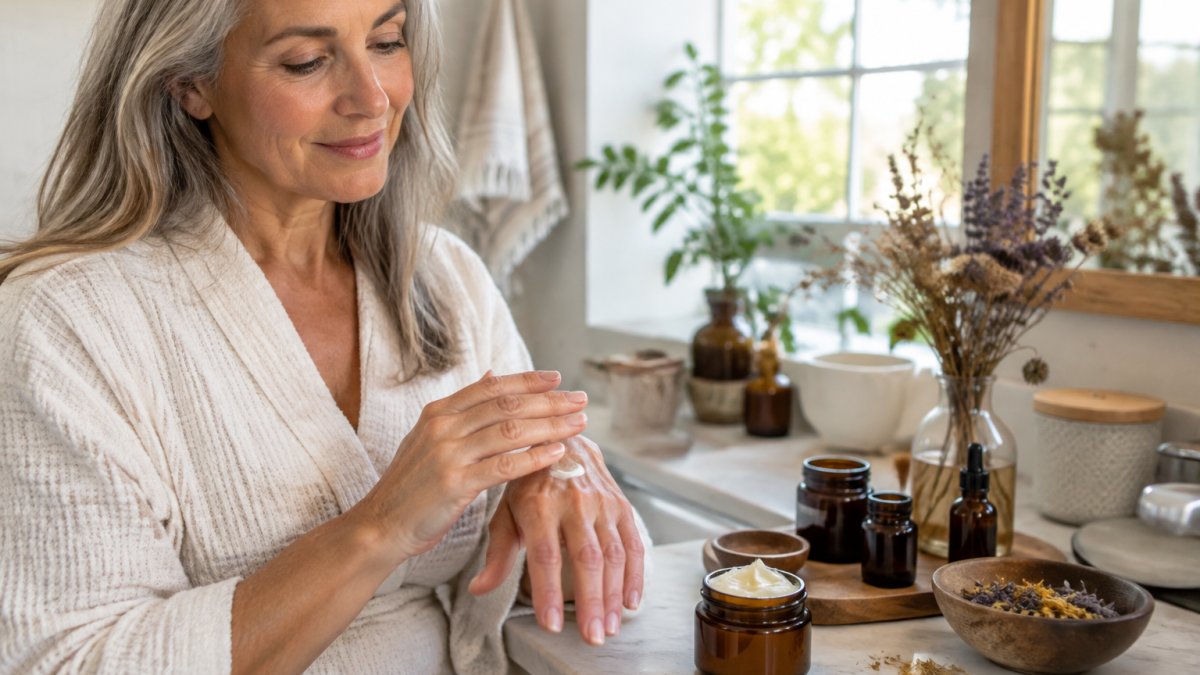
The Four-Step Framework
Every routine below follows the same logic: cleanse without stripping, hydrate while skin is damp, treat one concern, and seal with moisture and sun protection. The differences come from texture, actives, and how many products you introduce at once.
Dry Skin
- Morning: Cream cleanser, hydrating toner or essence on damp skin, a serum with glycerin or hyaluronic acid, a rich moisturizer, then sunscreen.
- Evening: Cleansing balm or oil to remove makeup and sunscreen, cream cleanser if needed, a barrier-supporting serum with ceramides or squalane, and a thick moisturizer or body butter applied while skin is still damp.
Dry skin benefits from layering moisture rather than using one heavy product. Apply each layer within about 60 seconds of the last so water stays trapped against the skin.
Oily and Acne-Prone Skin
- Morning: Gel cleanser, lightweight hydrating serum, oil-free gel moisturizer, then a non-comedogenic sunscreen.
- Evening: Gel cleanser or a double cleanse with a balm followed by a gel cleanser, a treatment with salicylic acid or niacinamide two to three nights per week, and a light gel moisturizer.
Watch out: over-cleansing and alcohol-heavy toners can trigger more oil production, so keep cleansing to twice daily and skip astringents that leave skin tight.
Sensitive and Reactive Skin
- Morning: Fragrance-free cream cleanser, a short ingredient-list moisturizer, then a mineral sunscreen.
- Evening: Fragrance-free cleanser, one calming serum with ingredients like colloidal oatmeal, bisabolol, or panthenol, and a fragrance-free moisturizer.
Keep the product count low. Sensitive skin does better with three or four stable products than with a rotating shelf of remedies.
How to Introduce Products Gradually
Add one new product every two weeks. Keep everything else unchanged so a reaction can be traced to a single item. Patch test on the inner forearm for 24 to 48 hours before using a product on your face, and introduce treatment steps at night first.
Adjusting for the Season and Your Day
In low humidity, add a hydrating layer and switch to a cream cleanser. In heat and humidity, lighten moisturizers and rinse with lukewarm water after sweating.
Evening is also when a grounding ritual pays off. If you want a fuller wind-down, our guide on how to build a relaxing evening bath routine at home walks through it step by step.
If you have mature skin, a body butter with rosehip, frankincense, and argan oils may suit your routine. Our whipped body butter for mature skin is built for exactly that. For scars, dark spots, or uneven tone, a brightening butter with turmeric, licorice, and rosehip gives you a targeted option: Golden Radiance for scars and pigmentation.


Here is how the four-step framework shifts for each skin type, plus the gradual introduction plan.
| Skin type | Morning | Evening | Key caution |
|---|---|---|---|
| Dry | Cream cleanser, hydrating toner, glycerin serum, rich moisturizer, sunscreen | Cleansing balm, barrier serum, thick moisturizer on damp skin | Layer moisture within about 60 seconds |
| Oily and acne-prone | Gel cleanser, lightweight serum, oil-free gel moisturizer, non-comedogenic sunscreen | Gel cleanser, salicylic acid or niacinamide two to three nights weekly, light gel moisturizer | Over-cleansing and alcohol toners trigger more oil |
| Sensitive and reactive | Fragrance-free cream cleanser, short ingredient-list moisturizer, mineral sunscreen | Fragrance-free cleanser, one calming serum, fragrance-free moisturizer | Keep product count low, three or four stable products |
| Introducing products | Add one new product every two weeks | Patch test inner forearm for 24 to 48 hours | Introduce treatment steps at night first |
Choosing Holistic Skincare Products Without the Greenwashing
The word "natural" has no single regulated meaning, according to the School of Natural Skincare. That is the core problem. A "natural" label alone tells you almost nothing about what is inside the jar.
So read the label, not the marketing. Use this checklist before you buy:
- Are the first five ingredients recognizable plant oils or butters?
- Is the full ingredient list printed, not just "key botanicals"?
- Does the brand name its sourcing and ethics plainly?
A product can be plant-based and still irritate your skin. "Natural" and "safe for you" are not the same claim. For a deeper walkthrough, read our guide on how to identify greenwashing in organic skincare.
Natural Skin Care Homemade: What Works and What to Skip
Homemade natural skin care can work for simple, low-risk steps. It fails when people treat kitchen ingredients as medicine.
Calm Healing for Sensitive or Irritated Skin (Organic Line) →
What works:
- Oatmeal baths to calm itchy, irritated skin
- Plain yogurt or honey masks for gentle hydration
- Cold-pressed oils like jojoba or sweet almond as a light moisturizer
What to skip:
- Lemon juice on skin, which can burn and cause dark spots
- Baking soda scrubs, which strip the skin barrier
- Essential oils applied neat, undiluted
A 2025 study in PubMed Central on herbal skincare ingredients examined how traditional herbs fit into modern skincare and called for a structured framework to integrate them. Translation: herbs can help, but they need careful formulation, not guesswork. Small-batch, handcrafted products give you that structure without the trial and error.
Natural Skincare for Holistic Healing Reviews: How to Judge Real Results
Reviews are useful, but only if you know what to look for. Most natural skincare for holistic healing reviews online measure the wrong things: scent, packaging, and how fast a product absorbs. None of that tells you whether the product changed your skin. The practical approach below helps you judge results on your own skin and read reviews with a more critical eye.
Track Four Things, Not Ten
Pick one or two concerns and score them once a week on a simple 1-to-5 scale. Keep the same lighting and time of day for any photos.
- Irritation: redness, stinging, itching, or flaking after use.
- Hydration: how long skin feels comfortable after moisturizing.
- Breakouts: count new spots and note whether they cluster where you applied a new product.
A notebook or a note on your phone is enough. The goal is a before-and-after record you can actually compare, not a perfect diary.
Realistic Timelines by Concern
- Dryness and flaking: comfort often improves within one to two weeks of consistent moisturizing, but barrier recovery takes longer.
- Irritation and sensitivity: calming ingredients may reduce visible redness within two to four weeks, provided you remove the trigger.
- Breakouts: expect four to eight weeks before judging a new treatment, and longer if you are also changing cleansers or moisturizers.
Set expectations honestly. Natural products support skin health; they do not cure conditions. If a review promises overnight transformation, treat it as marketing rather than evidence.
Separate the Product From Everything Else
Change one thing at a time. If you start a new serum, a new sleep schedule, and a new diet in the same week, you cannot tell what helped. Keep your cleanse, moisturize, and sunscreen steps stable while you test a treatment, and give it at least four weeks before deciding.
Read Reviews Like an Editor
Look for reviews that name a skin type, a concern, a timeframe, and a specific change. Skip reviews that only describe scent or packaging, and be cautious with reviews that read like a list of every possible benefit. A useful review tells you what did not work as often as what did.
Check Batch Consistency Before You Reorder
A small-batch brand should keep its formulas stable across orders. Ask how a brand handles batch variation, whether it lists a batch number, and whether the scent or texture is expected to shift slightly between batches. Consistency is a quality signal, not a guarantee, but it helps you judge whether a reaction came from a formula change or from your skin.
Ingredient Safety, Allergies, and When to See a Professional
Natural ingredients can still cause reactions. A Cleveland Clinic summary on natural skin care reports that many natural products contain allergens that can trigger contact dermatitis. That does not mean natural products are unsafe.
Always patch test. Apply a small amount to your inner forearm, wait 24 to 48 hours, and check for redness, itching, or swelling.
See a dermatologist if you notice:
- A rash that spreads or does not clear
- Signs of infection, like warmth or pus
- A mole that changes shape, color, or size
For reactive, chronically dry, or sensitive skin, a fragrance-free formula is the safer starting point. Our Calm Healing body butter for sensitive or irritated skin is fragrance-free and includes chamomile, borage, and evening primrose oils.

Shop Sattva Essence to Start Your Healing Ritual
Building a natural skincare routine takes patience, honest labels, and products that respect your skin barrier.
Our products are handcrafted in small batches, vegan and cruelty-free, and made with natural botanicals. Our frequency-infused formulations are designed to support a grounding, meditative ritual.
Ready to begin? Get started with Sattva Essence Organics and Naturals and turn your daily routine into a ritual that supports your skin and your peace of mind.
Frequently Asked Questions
How long does it take to see results from a natural skincare routine?
Most plant-based routines need four to six weeks of consistent use before you can judge them fairly, because skin renews on a roughly monthly cycle. Track one thing at a time, such as flaking or tightness after cleansing, and note it weekly. If a product stings, burns, or triggers a rash, stop it immediately rather than waiting out the timeline. Patch test new products on your inner forearm for 48 hours first, especially if you have sensitive or reactive skin.
Are holistic skincare products suitable for sensitive skin?
They can be, but natural does not automatically mean gentle. Natural skincare products can contain allergens that cause contact dermatitis, so read the full ingredient list rather than trusting the front label. Fragrance-free formulas built on butters and oils, like Sattva Essence Calm Healing for Sensitive or Irritated Skin ($34.00), are a reasonable starting point. Patch test first, and check with a doctor before using anything on diagnosed eczema or broken skin.
Can homemade natural skincare actually improve your skin?
Some kitchen ingredients earn their place. Colloidal oatmeal soothes itch, plain yogurt delivers mild lactic acid, and cold-pressed oils seal in moisture. The trouble is preservation: anything containing water grows bacteria within days, so keep homemade mixes to single uses and store oil-only blends in the fridge. Skip lemon juice and baking soda, which disrupt the skin barrier. For daily cleansing and moisturizing, a properly preserved small-batch product is the safer route.
How do you choose a holistic skincare brand you can trust?
Look for full ingredient lists, not just the highlighted botanicals, and check whether the brand names its preservative system. The term natural has no single regulated meaning, so a natural label alone proves nothing. Ask about batch sizes, sourcing, and cruelty-free certification. Request a patch-test sample before committing to a full size.


