

Last Updated: October 23, 2026
Quick Summary
To build a relaxing evening bath routine at home, clear and dim your bathroom, then layer warm light, a familiar scent, and quiet sound before you step in. Keep the water at roughly 37°C to 39°C (98°F to 102°F) and soak for 15 to 20 minutes, ideally 60 to 90 minutes before bedtime.
- Set out a towel, robe, and bath tray before you turn on the tap.
- Water above 40°C (104°F) raises your heart rate and can cause dizziness.
- Use about 1 to 2 cups of Epsom salt in a standard tub of warm water.
- A standard bedtime routine runs 30 to 60 minutes before bed, per the Sleep Foundation.
- Apply a body butter or oil while skin is still slightly damp after patting dry.
Table of Contents
- Step 1: Set Up Your Bathroom for a Calming Evening Bath
- Step 2: Learn How to Make a Calming Bath With Light, Scent, and Sound
- Step 3: Get the Water Temperature Right Before You Step In
- Step 4: Choose Your Bath Essentials for Relaxation
- Step 5: Nail Your Bath Soak Duration and Evening Timeline
- Step 6: Follow a Post-Bath Skincare Routine That Locks In the Calm
- Bath Safety and Skin Considerations for a Relaxing Bath Routine
- No Tub? How to Adapt Your Evening Bath Routine
- Frequently Asked Questions
Step 1: Set Up Your Bathroom for a Calming Evening Bath
A relaxing evening bath routine starts with a bathroom that signals rest before you even turn on the tap. Clear the space, lower the lights, and set out what you need before the water runs.
Clutter works against calm. Put away laundry and bottles first. Then set the room up for the soak ahead.
"Routine immersion bathing is more beneficial to mental and physical health than routine shower bathing without immersion," according to a randomized study on bathing's physical and mental effects. That finding makes the setup worth the effort.
Here is how we set up a bathroom for a calming bath:
- Wipe down the tub and rinse it well
- Fold a clean towel and set it within reach
- Place a bath tray across the tub for soap and a book
- Dim the overhead light and switch to soft lighting
- Lay out a robe so you stay warm after you step out
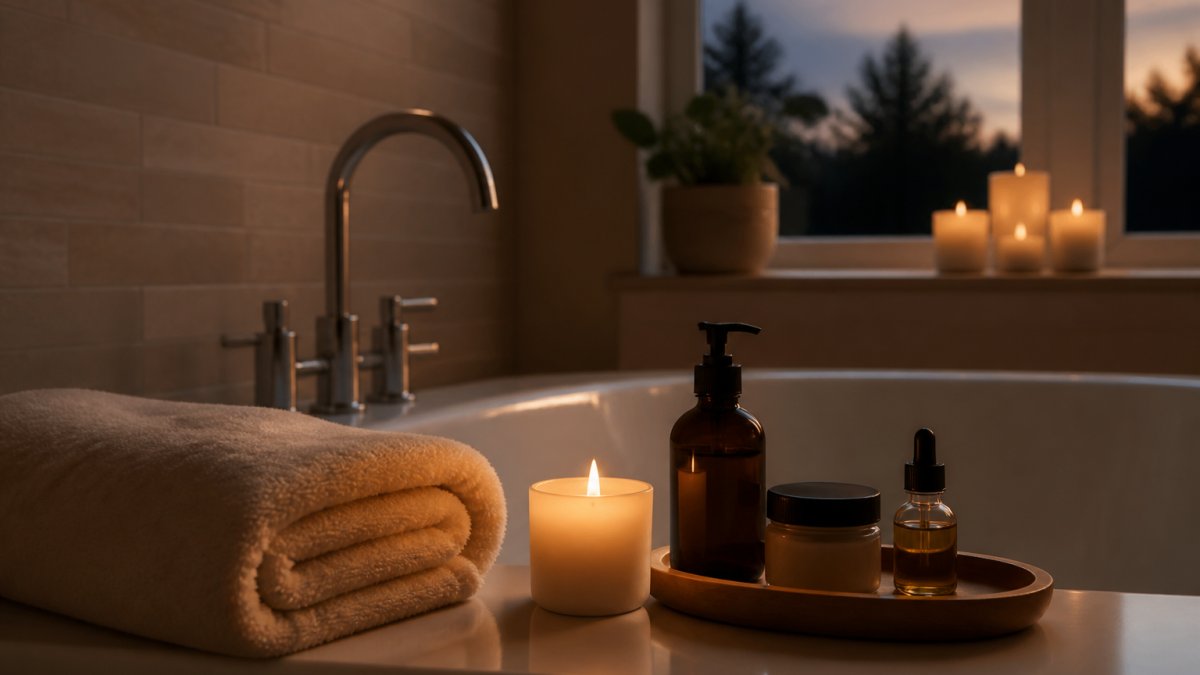
Keep your phone in another room. A screen-free activity, like reading, fits the mood better.
Step 2: Learn How to Make a Calming Bath With Light, Scent, and Sound
To make a calming bath, engage the senses one at a time: warm light, a familiar scent, and quiet sound. Each layer tells your body the day is ending.
Start with light. Candlelight and dimmed lights soften the room far more than bright overheads. A clean-burning coco soy candle does double duty, setting the mood and adding a warm scent layer. You can browse Sacred Sattva Candles to find a scent that fits your evening.
Next comes sound. Relaxing music or instrumental music at low volume covers household noise without demanding attention.
Then scent. Warm scent layering is one of the defining bath ritual trends of 2026, with small-batch products turning a daily soak into a spa-like experience (Pure Wash bath ritual trends).
Step 3: Get the Water Temperature Right Before You Step In
The right bath temperature is warm, not hot: aim for roughly 37°C to 39°C (98°F to 102°F). Water in that range relaxes muscles without leaving you dizzy or overheated.
Test with your wrist or elbow, not just your fingers. Those areas read heat more accurately.
A few rules keep the soak comfortable:
- Fill the tub so water covers your body without spilling
- Add cool water if your skin turns red or you feel lightheaded
- Keep the room ventilated with a cracked door or fan
- Set a timer so you do not drift off in the tub
Step 4: Choose Your Bath Essentials for Relaxation
The best bath essentials for relaxation are simple: a salt, an optional fizzing or melting product, a gentle cleanser, and a moisturizer for after. You do not need a cabinet full of products, and more additives do not equal more relaxation.
Start with the salt. Epsom salt is magnesium sulfate, and it dissolves into warm water to soften it and ease sore muscles.
Bath bombs and bath melts add fizz, scent, and a little oil in one step. Read the label before you drop one in.
Essential oils and aromatherapy can deepen the experience, but dilution is not optional. Never drop undiluted oils straight into the water.
A few product-selection rules keep the soak comfortable:
- Patch-test any new bomb, oil, or salt on a small area of skin before a full soak
- Skip additives entirely if you have broken skin, a rash, or a known fragrance allergy
- Choose fragrance-free or oatmeal-based products if your skin reacts easily
- Keep the ingredient list short if you are unsure what your skin tolerates
- Store bombs and salts in a sealed container away from humidity so they do not clump or lose fizz
If you want to pick a bath bomb for your soak, you can shop Sattva Essence bath bombs and read the full ingredient lists. The goal is one salt, one scent, and one moisturizer you can repeat without thinking, not a shelf of half-used products.
Step 5: Nail Your Bath Soak Duration and Evening Timeline
A good bath soak duration is 15 to 20 minutes. Longer soaks dry out skin and can leave you lightheaded.
Bath Bomb – Lavender Spa Collection →
Timing matters as much as length. A standard bedtime routine runs 30 to 60 minutes before bed, per the Sleep Foundation's guide to building a better bedtime routine. Warm baths taken 60 to 90 minutes before bedtime may support sleep by helping the body's natural temperature regulation (This Works guidance on evening bathing).
Here is a simple evening timeline:
| Time Before Bed | Step | Duration |
|---|---|---|
| 90 minutes | Draw the bath and light a candle | 10 minutes |
| 75 minutes | Soak and unwind | 15-20 minutes |
| 55 minutes | Pat dry and apply body care | 10 minutes |
| 45 minutes | Dim lights, read, or stretch | 30 minutes |
| 15 minutes | Final wind-down, lights out | 15 minutes |
Adjust the schedule to your own clock. Consistency matters more than precision.
Step 6: Follow a Post-Bath Skincare Routine That Locks In the Calm
A post-bath skincare routine should seal in moisture within a few minutes of stepping out, while skin is still damp. Warm water strips oils, so replacing them quickly keeps skin soft.
Pat dry instead of rubbing. Then apply a body butter or oil while skin is slightly wet.
Exfoliate once or twice a week, not nightly. A gentle sugar polish smooths rough skin and boosts circulation. Our Sacred Stillness, Whipped Sugar Scrub is vegan and cruelty-free.
For daily hydration, a whipped body butter melts in without a greasy feel. Our Sacred Stillness, Whipped Body Butter is made for deep, lasting nourishment.
Bath Safety and Skin Considerations for a Relaxing Bath Routine
Bath safety comes down to three things: safe water temperature, a non-slip surface, and careful use of candles and oils. Most bath injuries are preventable with a few small habits, and the skin-suitability rules matter just as much as the slip rules. Establishing these physical safeguards provides the necessary foundation for a truly relaxing home environment where you can fully transition into a state of restorative calm.
Slipping is the most common risk. Use a rubber bath mat and grab bars if you need them. Never stand to reach a bottle; keep everything on a tray instead. Keep the bathroom door unlocked, and tell someone in the house you are taking a bath so a fall is not unnoticed.
Water temperature is the second risk. Water above 40°C (104°F) raises your heart rate and can cause dizziness, especially if you take medication or have low blood pressure. If you feel faint, get out slowly and sit down.
Candles need open space. Keep flames away from towels, curtains, and the tub edge. Blow them out before you get out, and never leave a lit candle unattended if you leave the room. A flameless candle is a reasonable substitute if you tend to drift off.
Skin suitability is where most routines go wrong. A patch test is the simplest safeguard: apply a new oil or bomb to a small area first, and skip additives if you have broken skin, a rash, or a fragrance allergy.
A few more safety and suitability habits:
- Drink water afterward to replace what the warm soak pulled out
- Set a timer so you do not drift off in the tub
- Keep a towel and robe within reach so you are not cold and wet while searching
- Store products out of reach of children and pets
- Stop using any product that causes redness, itching, or burning, and rinse the area with cool water
A relaxing bath should leave you calmer, not irritated. Treat the safety and skin rules as part of the ritual, not an afterthought, and the routine stays repeatable night after night.
No Tub? How to Adapt Your Evening Bath Routine
You can still build a relaxing evening bath routine without a bathtub. The goal is the same: warm water, dim light, and a calm scent that signals rest.
Try a warm foot soak in a basin with Epsom salt. Add a candle and soft music. Follow with a sugar polish on your feet and a body butter on damp skin.
A warm shower works too. Lower the lights, use a lavender-scented product, and take three slow breaths before you step out. For more ideas, see our guide to vegan skincare rituals for stress relief.
A calming evening bath routine only works if you can repeat it on a normal Tuesday, not just a spa day. Start with a clear bathroom, warm water, and one scent you love, then let the habits build. At Sattva Essence Organics and Naturals, we make small-batch, frequency-infused bath bombs, sugar polishes, and whipped body butters that fit right into that ritual. Every product is vegan, cruelty-free, and made with natural botanicals.
Frequently Asked Questions
How long should you soak in a relaxing bath?
Aim for 15 to 20 minutes of soaking, with 20 minutes as a practical ceiling for most adults. Warm baths taken 60 to 90 minutes before bedtime may support sleep by helping the body's natural temperature regulation, according to wellness guidance. Longer soaks raise the risk of lightheadedness and skin dryness, especially in hot water. If you are new to an evening bath routine, start at 10 minutes and add time as you learn how your body responds.
Do you need to rinse off after taking a bath?
A quick rinse is worth the extra minute. It washes away leftover bath bomb residue, Epsom salt film, and essential oil droplets that can irritate sensitive skin or leave a slippery layer in the tub. A 2018 randomized study in PMC found routine immersion bathing improved mental and physical health compared with shower-only routines, and a brief rinse afterward does not undo that benefit. Pat dry rather than rub, then move straight into your post-bath skincare routine.
What should you put in a bath to help you relax?
Epsom salt, a bath bomb, or a few drops of essential oil diluted in a carrier are the simplest options. Lavender is the most common choice for winding down, and an oatmeal milk and honey blend suits dry or sensitive skin. Skip anything with strong synthetic fragrance if your skin reacts easily. Whatever you add, keep the water warm rather than hot and stay in for roughly 15 to 20 minutes so the bath soothes instead of drains you.
What should you do after an evening bath?
Pat your skin dry, apply a moisturizer within a few minutes while skin is still slightly damp, and keep the last hour before bed screen-free. A consistent sequence of activities in the hour before bed signals to the body that sleep is coming, per Sleep Foundation guidance. Dim the lights, skip caffeine and alcohol, and finish with a short stretch or a few pages of a book. The bath is the start of the wind-down, not the whole routine.


